Music is present in many areas of life – as a shared experience, a form of expression, and a unifying force. More than one-fifth of people in Germany actively make music. Music education lays the foundation for this: it fosters creativity, promotes expressive and perceptual skills, and opens up spaces for encounter, participation, and cross-cultural understanding. Against this backdrop, the congress addressed the question of how music education can be further strengthened through collaboration between initiatives, educational institutions, and cultural actors.
The Liz Mohn Foundation contributed in particular its experiences from the “Kulturbrücke Cantara” initiative – a joint project with Gesellschaft in Bewegung e.V. (GiB! e.V.). The project provides children and young people with low-threshold access to cultural education: in cooperation with schools and local partners, ongoing programs are developed in which young people can discover music, dance, theater, and other forms of artistic expression.
During the panel discussion “Music for Children – Initiatives and Organizations from Berlin, Dresden, Gütersloh, and Potsdam,” Annika Frank and Leila Benazzouz joined other music professionals to discuss successful approaches to music education. The discussion highlighted the importance of dedicated initiatives, strong local networks, and long-term partnerships in establishing sustainable music programs and reaching as many children as possible.
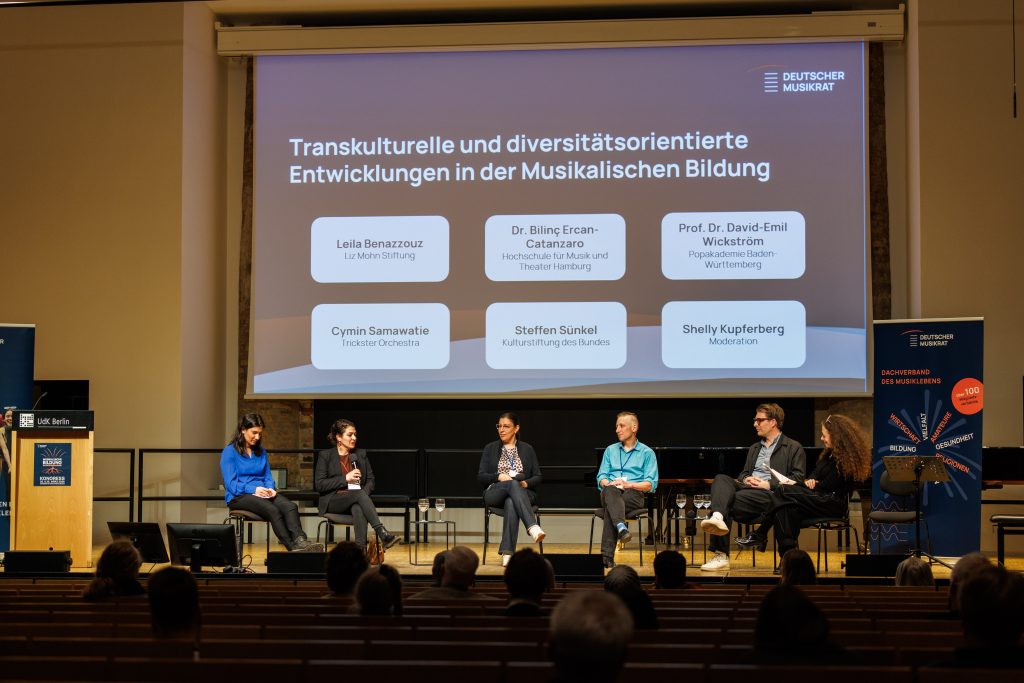
In addition, Leila Benazzouz participated in the panel “Transcultural and Diversity-Oriented Developments in Music Education.” The focus was on how music education programs can better account for social diversity and open up new avenues for cultural participation. “Music education can create spaces where people with different experiences and cultural backgrounds can engage with one another. When programs incorporate diverse perspectives, a shared learning experience emerges that has an impact far beyond music”, says Leila Benazzouz of the Liz Mohn Foundation.
The Liz Mohn Foundation is committed to strengthening music education, promoting cultural participation, and connecting cultural actors. The congress provided a valuable platform and new impetus for this and demonstrated once again how important collaboration and dialogue are for the further development of music education.