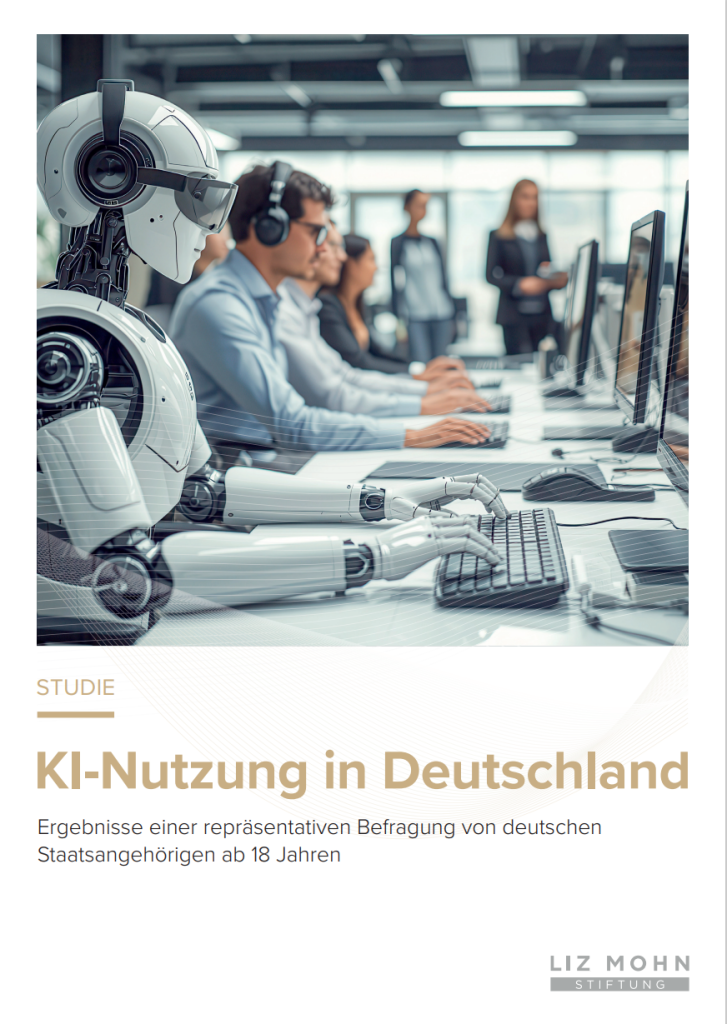
While AI is already influencing key arenas of public life ,the new representative study commissioned by the Liz Mohn Foundation shows that only a small minority (3 percent) of respondents believe that Germany is well prepared for stronger AI-integration. The vast majority describe the situation as mediocre or poor (94 percent). However, the social relevance of artificial intelligence is reflected in the broad interest of the respondents: more than half (57 percent) are taking steps to educate themselves about AI.
However, there seems to be a lack of guidance, clear rules, and reliable guidelines, even in areas where AI is in regular use. Insufficient understanding of how to use and apply AI effectively while regulating its effects still dampens widespread societal acceptance. The real challenge seems to lie not with technology itself, but with its governance and societal integration.
The central Role of Leadership
Respondents were particularly critical of political leadership: 60 percent believe that too little is being done in politics to promote AI. Government actors often seem too hesitant, offer too little guidance, and fail to treat the issue with the necessary urgency.
Yet, a successful AI integration cannot be achieved by politics alone, nor by individual companies or innovators. It is the special responsibility of leadership to provide guidance and direction during such transformations while minimizing uncertainties. Moreover, the study demonstrates that individual curiosity for AI technology is widespread. How to turn this positive momentum into competence and know-how will be a core responsibility of executives and determine Germany’s capacity to remain a global leader in science and technology in the future. However, the success of this transformation depends on executives perceiving AI as an opportunity instead of a threat.
The study “AI Use in Germany” (in German) is available for download below.