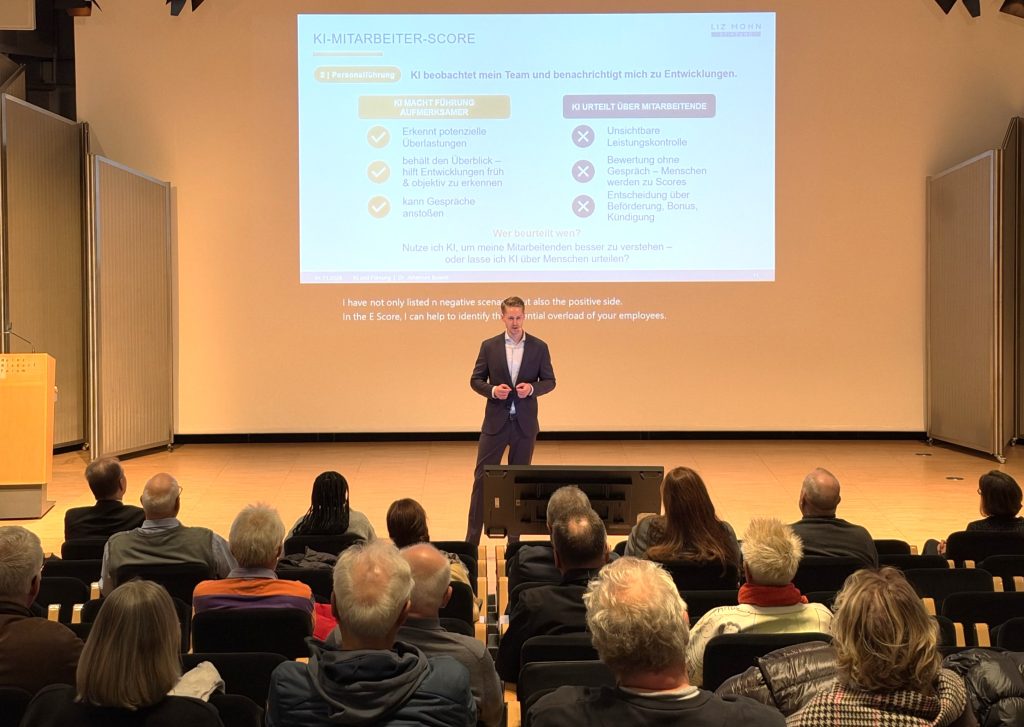
Drawing on three scenarios – an AI coach, an AI-based employee scoring system, and an AI manager – and on findings from recent studies by the Liz Mohn Foundation, the keynote explored the different roles AI can play in leadership. The same technology can either encourage reflection and support better-informed decision-making, or be used to exert control and create the impression that responsibility can be delegated to AI. The crucial question, therefore, is not only what AI can do, but also what role organizations and leaders choose to give it.
Guests at the Heinz Nixdorf MuseumsForum included entrepreneurs, executives, HR professionals, and interested members of the public. A particular highlight was the attendance of Prof. Dr. Christian Oelschlägel from Bielefeld University’s Institute for Diaconal Studies and Diaconal Management, accompanied by around 25 alumni of the international master’s program “Diaconic Management,” who hold leadership positions in church and diaconal institutions in various countries across Asia and Africa.
The ensuing discussion reflected this diversity of perspectives. One thing became clear: AI is a responsibility that leaders must take on. They must develop their own understanding of the technology’s potential and limitations, because they cannot delegate this responsibility. This involves acquiring the necessary knowledge, engaging and empowering employees, and guiding change within their organizations responsibly. At the same time, leaders are shaping the future of work and also bear a responsibility to society. Their actions also influence whether young people will have good opportunities to enter the workforce in the future.
The Liz Mohn Foundation thanks Dr. Elke Radeke, Executive Board member at INCONY AG and regional director of the German Informatics Society, for the invitation and for moderating the event; the team at the Heinz Nixdorf MuseumsForum for providing an excellent setting; and everyone present for their active participation and open exchange of ideas.