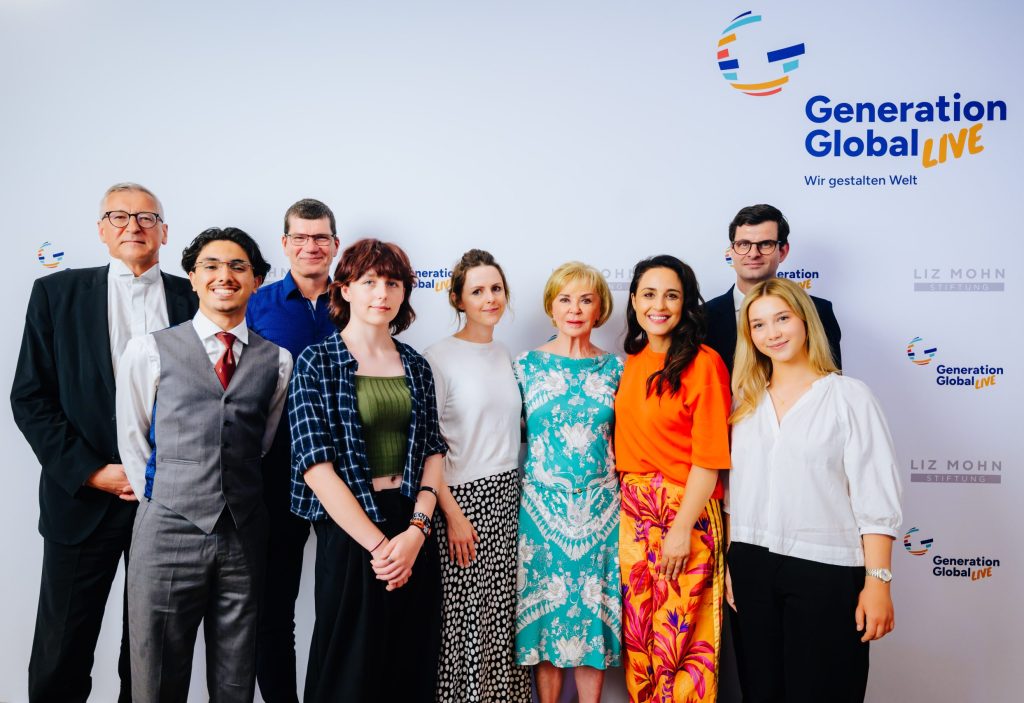
The ongoing debate about Germany’s new military service model and proposals for mandatory community service shows that the question of how young people can contribute to society is becoming increasingly important. The reason for this debate is a changing world order: Our way of life is facing its greatest external threat in 30 years. Authoritarian forces are growing stronger and dividing the world among themselves. With this in mind, what can young people do to defend democratic values in Europe? They also face very personal questions: What contribution am I prepared to make to society? How do I want to get involved as a volunteer? Would I perform military service? Is it fair that young women cannot be required to do so?
The Liz Mohn Stiftung invited 230 students from schools across the region to Gütersloh City Hall to discuss these and other questions at its “Generation Global LIVE” town hall conference. The idea behind the event is to give young people the opportunity to exchange ideas directly with experts and contribute their own views to public debate. In her opening remarks, Liz Mohn, founder and chair of the board of the foundation that bears her name, said: “We cannot solve the challenges of our time alone. We need dialogue, mutual understanding, and a willingness to engage with different perspectives. That is why we created this event.”
In her keynote address, Sophie Eisentraut of the Munich Security Conference put the current shifts in global power into context and related them to the everyday lives of young people. “People feel that the world is becoming increasingly uncertain and difficult to navigate,” Eisentraut told students from Gütersloh, Paderborn, Rheda-Wiedenbrück, and Rietberg.
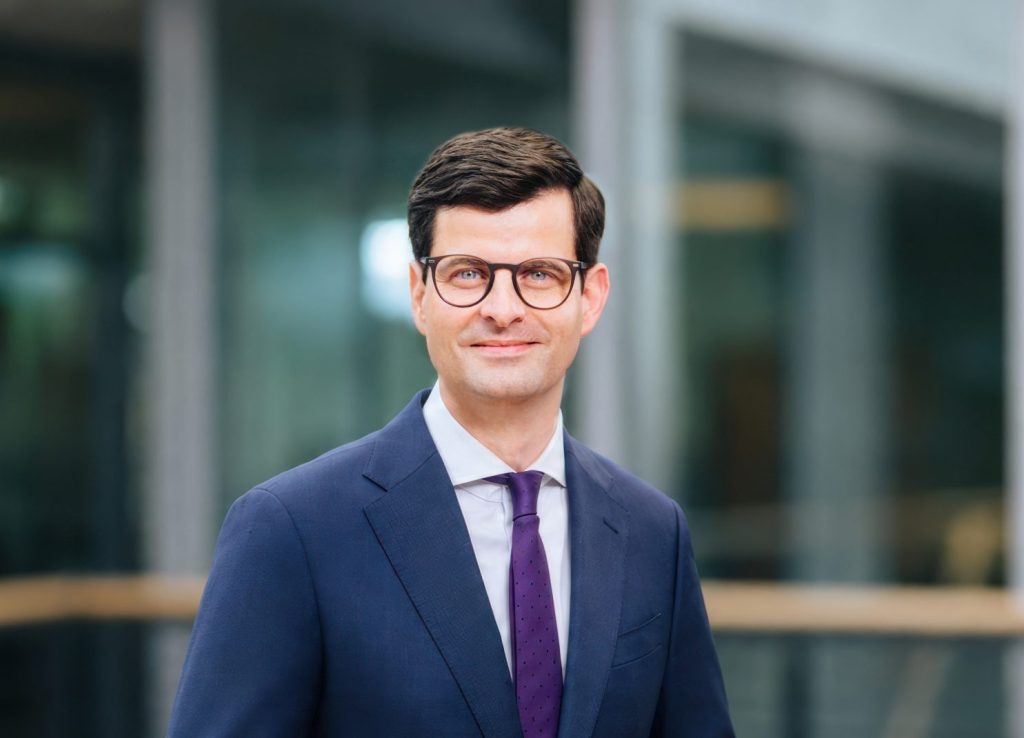
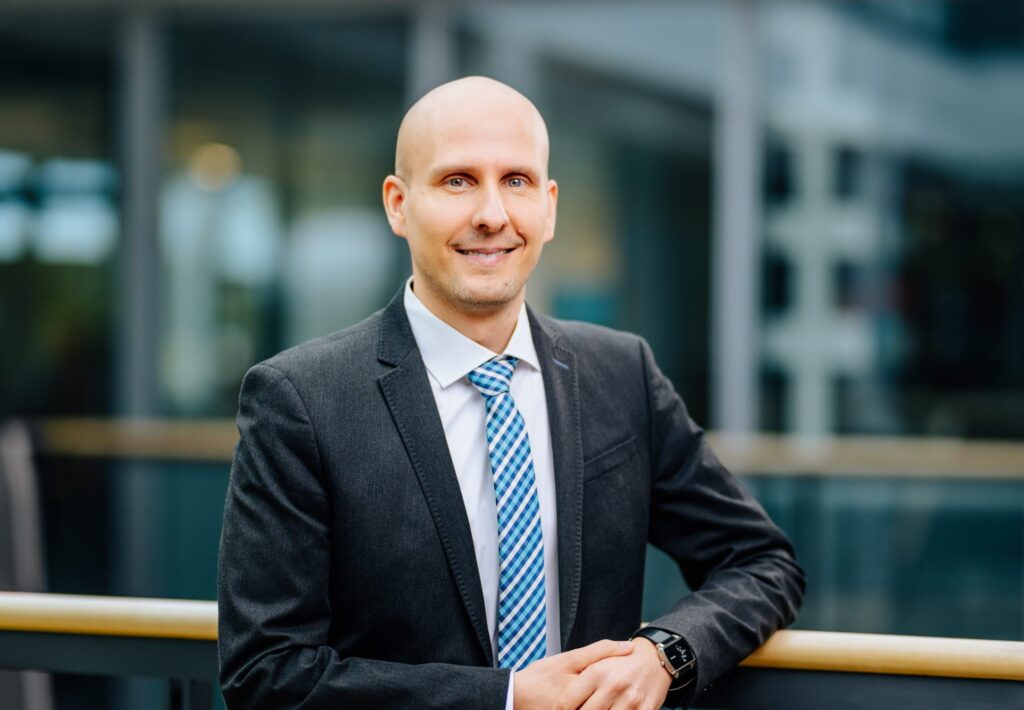
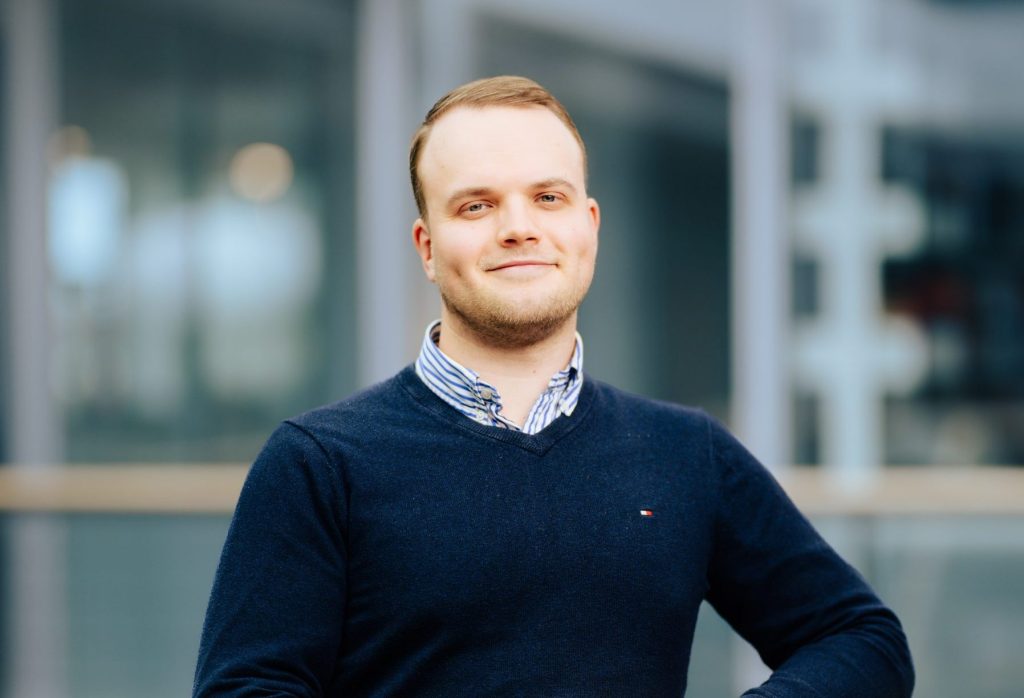
The panel also included Bernhard Felmberg, Military Bishop of the Protestant Church in Germany, and Olav Homburg, Head of the Federal Volunteer Service Division at the Internationaler Bund, who spoke about the different ways young people can contribute to society. Rayhan Butt, Katinka Winkelmann, and Marlén Wolfrum from the Liz Mohn Stiftung’s “Generation Global” network also joined the discussion. In the context of the debate on mandatory versus voluntary service, they focused in particular on their generation’s commitment to society and shared their personal life plans. Rayhan, who recently graduated from high school, has committed to military service beginning in October and spoke about the reactions from those around him: “At first, my mother was very worried about me joining the military.” Marlén and Katinka described how they contribute to society: volunteer work with people with disabilities and youth work at the local level.
The arena format, with a raised stage in the middle of the audience, invited students to contribute their questions and perspectives to the discussion. The open and respectful atmosphere gave many of the students in attendance the confidence to share their own perspectives and engage in constructive dialogue about differing viewpoints.
TV journalist Nina Moghaddam returned as moderator, connecting empathetically with the young people and their perspectives. She especially appreciated the panel discussion and the audience contributions: “Once again, we managed to exchange ideas while accepting that not everyone shares the same opinion.”
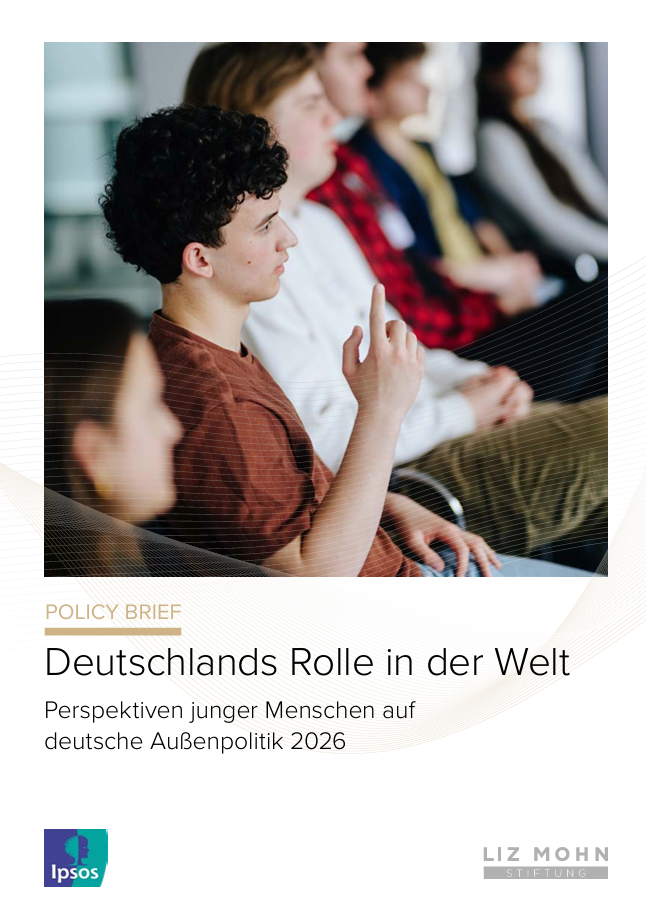
Following the 90-minute dialogue session, the conversations continued at themed discussion tables in the upper foyer of Gütersloh City Hall. The recently published study “Germany’s Role in the World 2026” was also presented there. It provides representative findings on the views of 12- to 18-year-olds on foreign policy issues.
“Generation Global LIVE” builds on the earlier “Zeitenwende on Tour” conference series, which was organized in Gütersloh in previous years by the Liz Mohn Stiftung together with the Munich Security Conference.